Stadium Lighting Patterns Shape Visibility Standards in Nighttime League Play
Henrik Sullivan · Aug 25, 2026
Stadium Lighting Patterns Shape Visibility Standards in Nighttime League Play
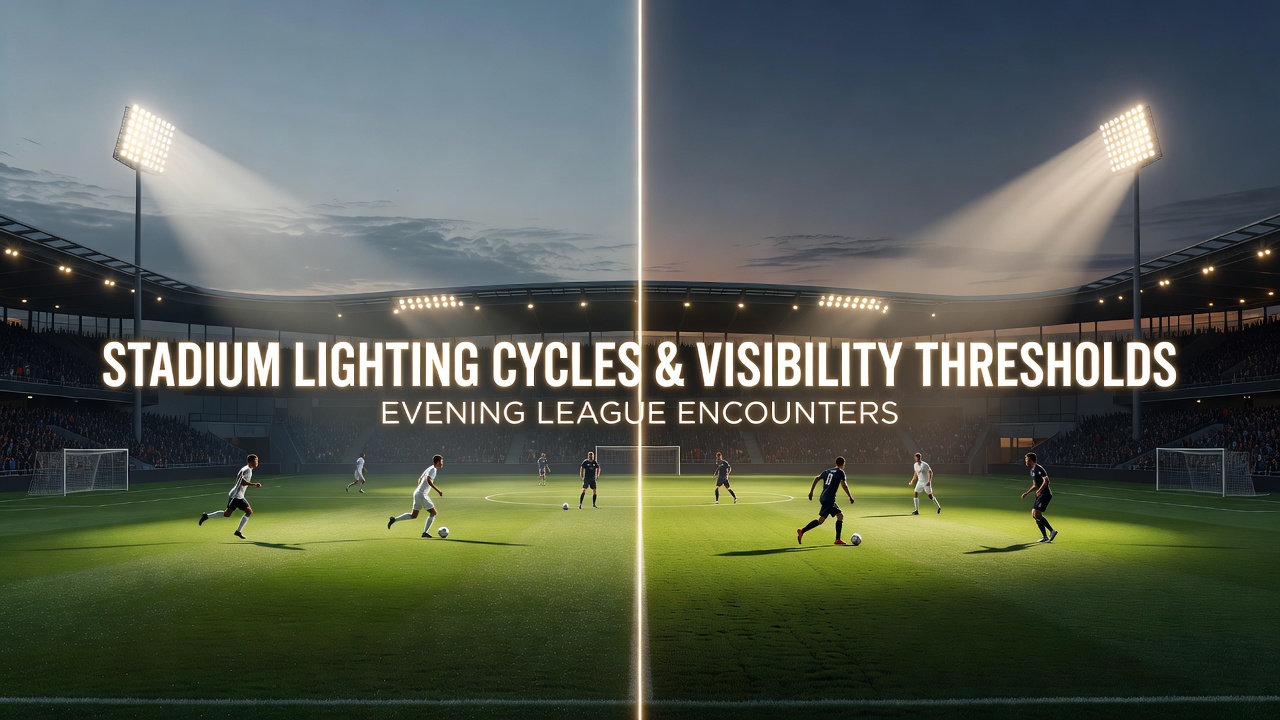
Stadium lighting systems operate on precise cycles that align with game schedules, player adaptation needs, and regulatory standards for evening competitions across major leagues. These cycles involve gradual ramp-ups from dusk through full illumination, with many venues transitioning to LED fixtures that allow finer control over intensity and color temperature compared to older metal halide setups. Data from facility management reports indicate that professional soccer and baseball fields typically maintain 1200 to 2000 lux across the playing surface during active play, while lower levels suffice for warm-ups and post-game periods.
Lighting Cycle Mechanics and Player Adaptation
Engineers design lighting sequences to account for human visual adaptation, which requires several minutes for eyes to adjust from twilight to bright artificial conditions. In August 2026, several North American venues implemented staggered activation protocols where perimeter lights activate first, followed by central field arrays over a 12-minute window. Studies from sports science institutions show this approach reduces initial glare complaints among athletes by measurable margins. Meanwhile, broadcast requirements often push facilities toward higher color rendering indices, ensuring television cameras capture accurate details without washing out player movements.
Visibility thresholds vary by sport and position. Outfielders in baseball require consistent illumination at distances exceeding 300 feet, whereas infielders operate under more uniform coverage near 500 lux minimums. Football codes demand even distribution to prevent shadows during high-speed plays, with governing bodies setting benchmarks that account for both player safety and officiating accuracy. Researchers tracking eye-tracking data during simulated evening sessions have documented how sudden drops below established thresholds correlate with increased reaction time variability.
Regional Standards and Technological Shifts
European leagues have adopted energy-efficient LED cycles that permit dimming during stoppages, a practice documented in facility audits from German and Spanish federations. These systems maintain core visibility while cutting consumption by up to 40 percent during non-active intervals. In contrast, Australian rules competitions emphasize rapid full-power restoration after weather delays, relying on backup generators to preserve threshold compliance. Observers note that such regional differences reflect both climate factors and league-specific scheduling demands.
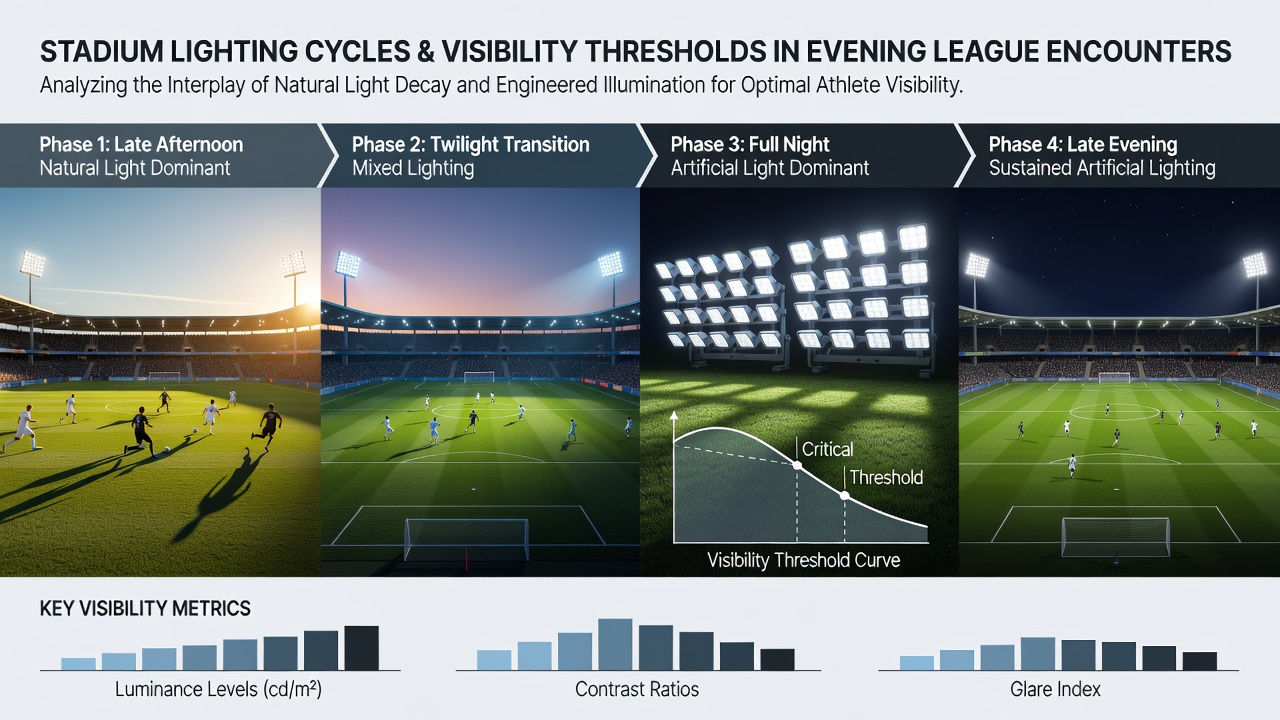
Industry reports from the U.S. Department of Energy highlight ongoing conversions to smart lighting grids that integrate sensors for real-time lux monitoring. These installations automatically adjust output when ambient light changes, keeping fields within prescribed visibility bands. Canadian venues have followed similar paths, with several CFL stadiums reporting reduced maintenance cycles after switching to modular LED banks that allow partial replacement without full system shutdowns.
Impacts on Game Flow and Safety Metrics
League data compiled through 2026 shows fewer visibility-related stoppages in venues using adaptive cycles versus those on fixed schedules. Players report improved depth perception when lighting maintains steady levels rather than fluctuating with manual overrides. Safety records from multiple competitions link consistent illumination to lower incidence of contact injuries during evening slots, though causation remains tied to multiple variables including field surface and player conditioning.
Training programs now incorporate night-vision drills that mirror typical stadium ramp-up sequences, helping athletes develop faster adaptation responses. Equipment suppliers have responded with specialized visors and eye-protection options calibrated to common LED spectra used in modern arenas.
Conclusion
Stadium lighting cycles continue to evolve alongside advances in sensor technology and energy standards, directly influencing the visibility thresholds that define safe and competitive evening league encounters. Facilities balancing regulatory requirements with operational efficiency demonstrate measurable improvements in both player performance consistency and energy metrics. Ongoing monitoring by sports organizations ensures these systems meet the demands of expanding schedules while prioritizing visual clarity for athletes, officials, and spectators alike.