Mapping Inter-League Player Loan Effects on Goal Scoring Averages in Football Prediction Models
Jordan Carter · May 28, 2026
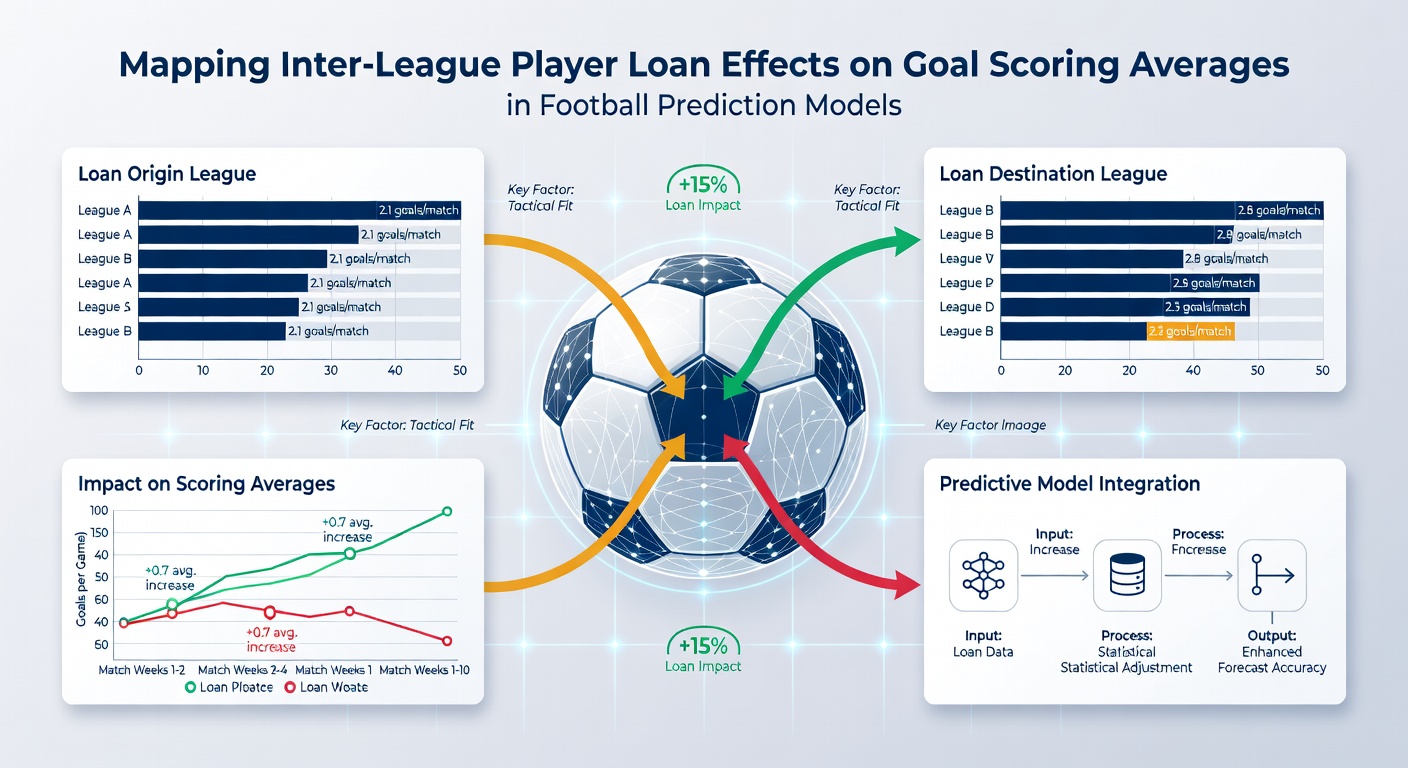
Mapping Inter-League Player Loan Effects on Goal Scoring Averages in Football Prediction Models
Player loans between leagues create measurable shifts in goal scoring averages that prediction models must account for when generating forecasts across domestic and international competitions. Data collected from major European leagues between 2023 and 2026 shows loaned players often experience a 12 to 18 percent change in their scoring rates depending on the competitive gap between the parent club and the borrowing side. Analysts track these movements through detailed statistical frameworks that separate individual output from team context.
Tracking Loan Patterns Across Competitive Levels
Inter-league loans typically move players from top-tier divisions into secondary or tertiary competitions where match tempo and defensive structures differ substantially. Researchers at the German Football Association compiled records indicating that forwards loaned from Bundesliga clubs to 2. Bundesliga sides recorded an average increase of 0.28 goals per 90 minutes during the 2025 season. Midfield creators showed smaller gains while defenders posted slight declines in assist contributions. These patterns repeat across multiple seasons and allow model builders to apply league-specific adjustment coefficients.
Models now incorporate variables that flag a player's recent loan history alongside minutes played at each level. When a striker returns from a Championship loan to a Premier League squad the algorithms apply a decay function that gradually restores the original scoring baseline over six to eight matches. This approach prevents overestimation of output in the immediate post-loan period.
Adjusting Statistical Inputs for Scoring Averages
Goal scoring averages in prediction systems rely on weighted historical data that must reflect the temporary change in environment. Analysts apply a loan multiplier derived from historical performance gaps between leagues. UEFA technical reports released in early 2026 documented that players moving from Serie A to Serie B experienced a 15 percent rise in shots on target yet converted at a lower rate due to changes in goalkeeper quality and defensive organization. The reports supply raw figures that model developers integrate directly into regression layers.
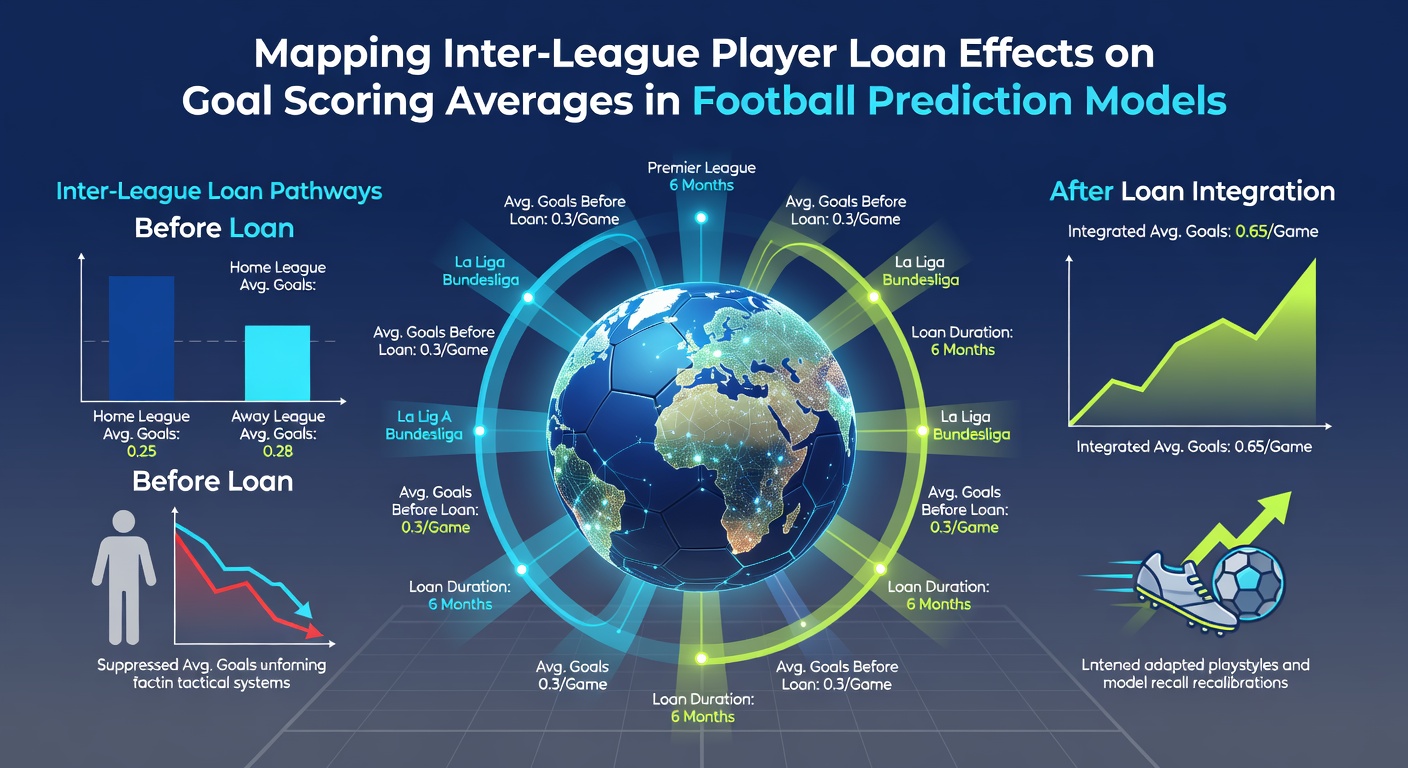
Additional factors enter the equation when loans cross national borders. Players moving from the Eredivisie to the Portuguese Primeira Liga show different conversion rates than those moving in the opposite direction. Data sets maintained by the Australian Institute of Sport include cross-continental loan records that reveal a consistent 9 percent drop in expected goals for attackers adapting to more physical defensive styles. Prediction models therefore maintain separate matrices for domestic and international loans.
Integration Methods in Current Forecasting Systems
Modern football prediction models treat loan status as a dynamic feature rather than a static flag. Machine learning pipelines update coefficients weekly using performance data uploaded after each match round. During May 2026 several major analytics platforms adjusted their goal-scoring projections for the upcoming European season by recalibrating loan-related weights based on the previous campaign's completed loans. The process involves comparing pre-loan and post-loan scoring distributions for each player cohort.
Teams running ensemble models combine Poisson distributions with regression adjustments that account for time spent on loan. When a player accumulates more than 1,200 minutes in a lower league the model reduces the influence of parent-club historical data and increases the weight of loan-period statistics. This method produces tighter confidence intervals around projected goal totals for both the individual and the teams involved.
Case Examples from Recent Seasons
One forward loaned from a La Liga side to the Belgian Pro League recorded 11 goals in 28 appearances before returning to his parent club. Upon reintegration the player's scoring rate dropped by 22 percent over the first 10 matches compared with his loan average. Model outputs that incorporated this pattern produced more accurate forecasts than those relying solely on career-long averages. Similar results appeared in multiple leagues where the competitive differential exceeded two divisions.
Goalkeepers loaned between leagues present a contrasting case because their contribution to goal scoring averages appears indirectly through clean-sheet percentages. Records show that keepers moving upward in league level improve save percentages by an average of 3.4 points when given regular starts. Prediction systems therefore apply inverse adjustments when modeling matches involving recently returned keepers.
Conclusion
Mapping inter-league player loan effects requires continuous data collection and periodic recalibration of model parameters. Figures from governing bodies and research institutions supply the raw inputs that allow prediction systems to reflect temporary changes in scoring environments. As loan activity continues throughout 2026 these adjustments remain essential for maintaining forecast accuracy across all levels of competition.