Biological Timing Shifts Reshape In-Play Markets During Evening Athletic Events
Drew Butler · Jul 26, 2026
Biological Timing Shifts Reshape In-Play Markets During Evening Athletic Events
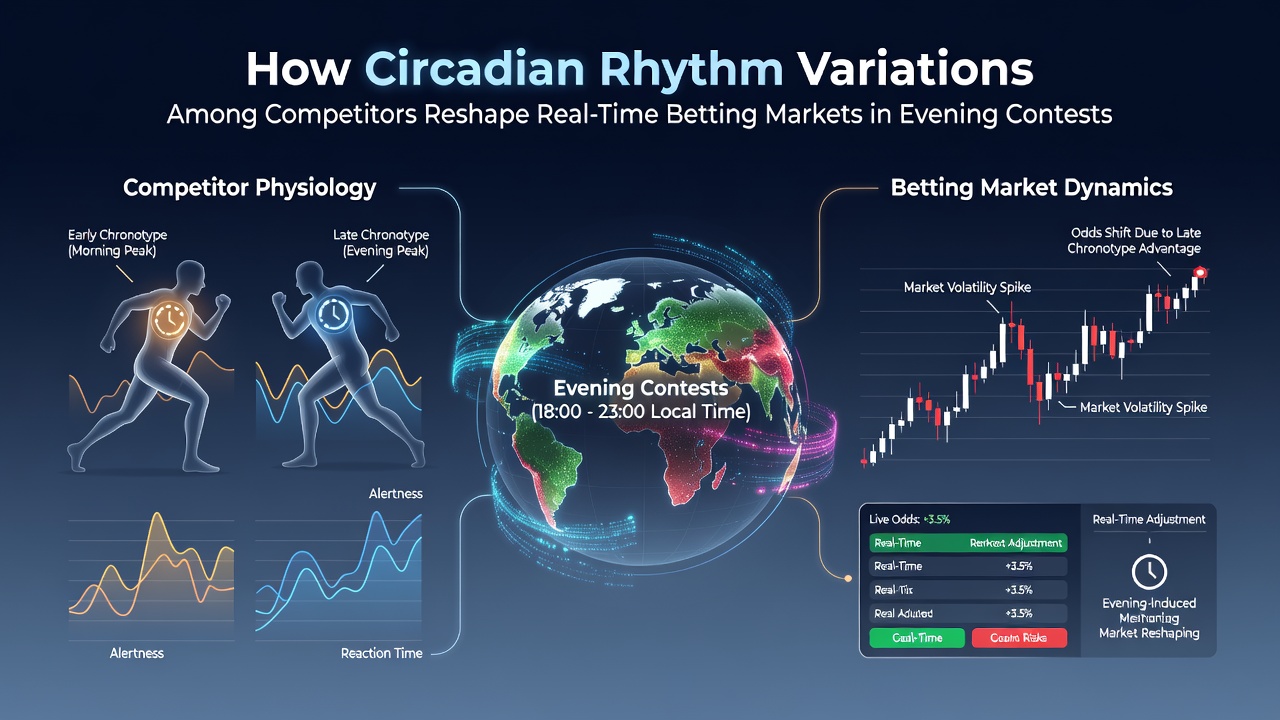
Competitors exhibit measurable differences in physiological readiness once the sun sets, and these patterns produce observable adjustments in real-time wagering lines across multiple sports. Data from performance tracking platforms indicate that core body temperature, reaction speed, and hormonal profiles follow predictable 24-hour cycles that diverge among individuals based on chronotype, training schedules, and travel demands. Evening contests therefore create a window where certain athletes maintain peak output while others experience gradual declines, prompting oddsmakers to recalibrate spreads, totals, and player props as matches progress.
Performance Metrics Under Evening Conditions
Studies compiled by the Australian Institute of Sport show that early chronotypes often register slower sprint times and reduced vertical leap after 8 p.m., whereas late chronotypes sustain or even improve those same measures during identical windows. These variations appear consistently in basketball, soccer, and tennis schedules that feature prime-time start times. When a team’s starting lineup contains a higher proportion of early chronotypes, live betting markets frequently see totals drift downward in the second half as fatigue accumulates faster than models initially projected. Conversely, squads built around night-oriented players generate upward pressure on over lines once the contest reaches the final quarter.
Real-Time Line Adjustments in Practice
Betting exchanges record thousands of micro-adjustments during a single evening fixture, many of them tied directly to biometric signals that align with circadian research. In July 2026, multiple North American basketball showcases illustrated the pattern when teams crossing multiple time zones displayed measurable drops in field-goal percentage after midnight local time. Live markets responded by tightening player prop thresholds on points and rebounds within the same quarter, reflecting updated expectations rather than static pre-game projections. Observers note that algorithmic models now incorporate publicly available sleep and travel data to anticipate these shifts before human traders fully react.
Regional Regulatory Perspectives on Data Integration
Canadian provincial regulators have begun requiring operators to document how external data sources, including circadian-informed performance indicators, influence automated line movements. This approach differs from European frameworks that emphasize transparency around algorithmic inputs without mandating specific biological variables. Both systems, however, acknowledge that evening performance fluctuations represent a measurable factor rather than random variance. As a result, operators adjust risk parameters more frequently during night sessions than during afternoon contests where biological rhythms remain closer to baseline for most participants.
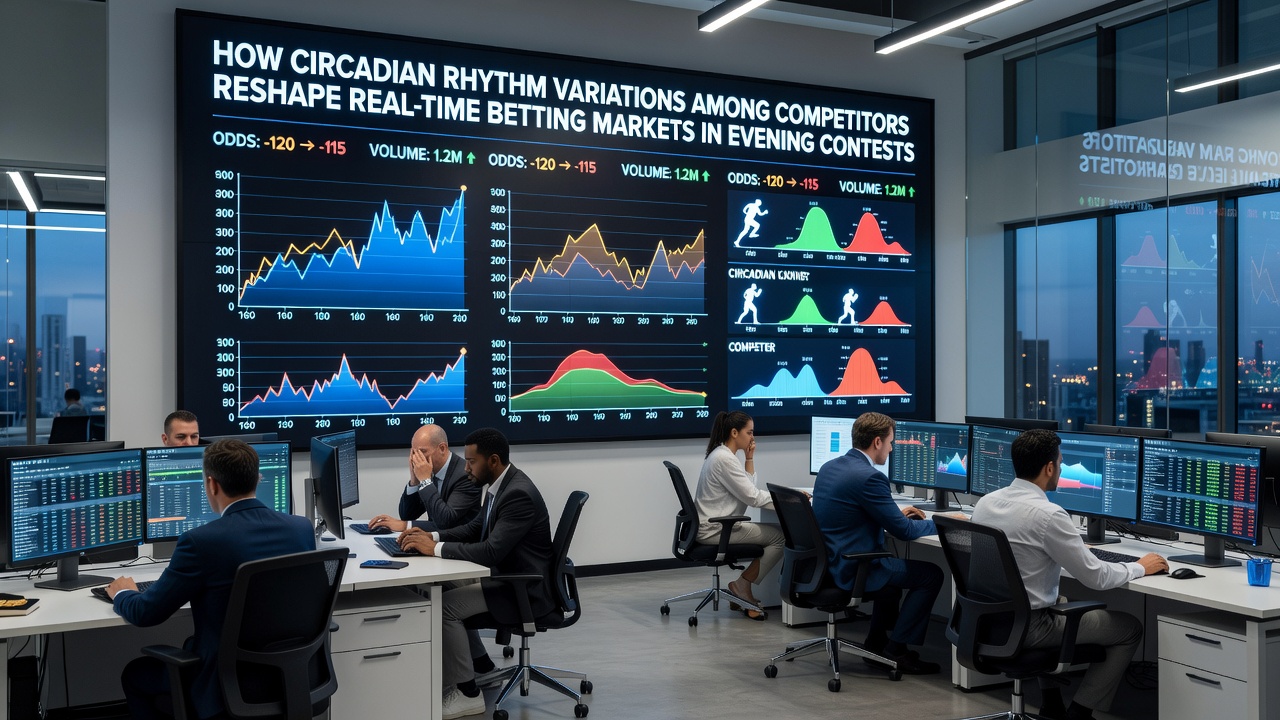
Take one series of evening soccer matches in 2026 where clubs traveled across continents: the side whose roster skewed toward later chronotypes maintained possession metrics above their season average deep into extra time, while teh opposing squad showed accelerated declines in high-intensity running. In-play markets adjusted goal totals and corner counts accordingly, with liquidity shifting toward the stronger late-evening performers. Such outcomes appear repeatedly when travel and kickoff timing interact with individual biological clocks.
Broader Market Implications
Industry reports from the European Gaming and Betting Association indicate that evening events generate higher volumes of in-play wagers than daytime equivalents, partly because performance divergence creates more frequent line movement and therefore more trading opportunities. Market makers incorporate additional variables such as venue lighting conditions, recovery intervals between games, and historical chronotype distributions within each roster. These inputs refine probability models that update continuously rather than at fixed intervals. The result is a betting environment where early wagers placed before tip-off or kickoff carry greater uncertainty compared with positions taken after the first half reveals which athletes are operating at or below their circadian optimum.
Researchers continue to examine how these patterns interact with other variables including nutrition timing, jet lag mitigation protocols, and age-related changes in circadian amplitude. Findings suggest that older competitors often experience steeper evening declines, a factor already reflected in certain prop market adjustments during extended playoff runs. As more granular biometric datasets become available, real-time wagering systems are expected to integrate additional layers of timing-based intelligence without altering the fundamental principle that markets price observed performance rather than predicted averages.
Conclusion
Evening athletic contests therefore function as natural laboratories where circadian rhythm differences among competitors translate into measurable market movements. Regulatory bodies across multiple jurisdictions continue to monitor how operators incorporate such data while maintaining fair play standards. The ongoing refinement of models that account for biological timing ensures that live betting remains responsive to the actual conditions unfolding on the field or court rather than static expectations formed hours earlier.