Atmospheric Conditions Modifying Real-Time Betting Markets in Outdoor Football and Basketball Competitions
Henrik Sullivan · Jul 9, 2026
Atmospheric Conditions Modifying Real-Time Betting Markets in Outdoor Football and Basketball Competitions
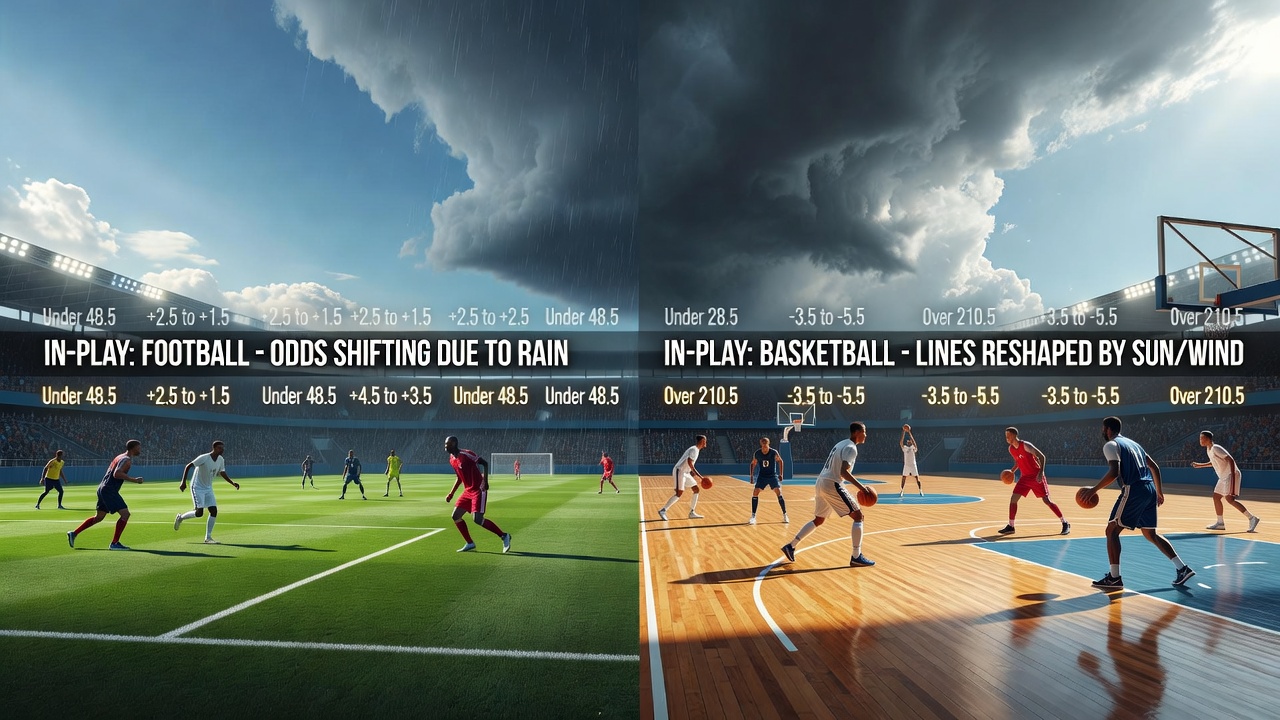
Weather patterns exert measurable influence on in-play betting lines for open-air football and basketball events, where sudden temperature drops, wind gusts, or humidity spikes prompt oddsmakers to recalibrate spreads and totals within minutes of observed changes. Data from multiple seasons shows these adjustments occur most frequently during afternoon and evening windows when atmospheric instability peaks, particularly in venues without retractable roofs or climate controls.
Tracking Environmental Variables in Real Time
Operators integrate live feeds from meteorological stations positioned near playing surfaces, allowing rapid updates to player prop thresholds and team totals as conditions evolve. Researchers at institutions tracking outdoor athletic performance note that wind speeds above 15 miles per hour correlate with reduced passing efficiency in football while simultaneously elevating under totals in basketball due to altered shooting percentages. These correlations appear in historical datasets spanning multiple leagues and geographic regions.
July 2026 brought extended heat waves across several North American markets, prompting betting platforms to monitor dehydration risks and recovery intervals between possessions more closely than in prior summers. Figures from the Australian Bureau of Meteorology, cross-referenced with performance logs, revealed that sustained temperatures exceeding 90 degrees Fahrenheit produced measurable dips in fourth-quarter scoring margins for outdoor basketball exhibitions.
Football Markets Respond to Wind and Precipitation
Football contests played under variable skies demonstrate pronounced line movement once precipitation begins, as oddsmakers widen totals to account for fumble frequency and field goal accuracy declines. One documented sequence during a late-summer contest showed the over/under dropping 3.5 points within eight minutes after steady rain commenced, reflecting updated models that incorporated turf moisture readings alongside historical wet-weather statistics.
Wind direction relative to the goalposts further influences field position props, with crosswinds above 12 miles per hour prompting bettors and books alike to adjust kicking distances and completion percentages. Industry reports compiled by the American Gaming Association indicate that such micro-adjustments account for a measurable share of in-play handle during exposed stadium events.
Basketball Lines Shift With Humidity and Temperature Swings
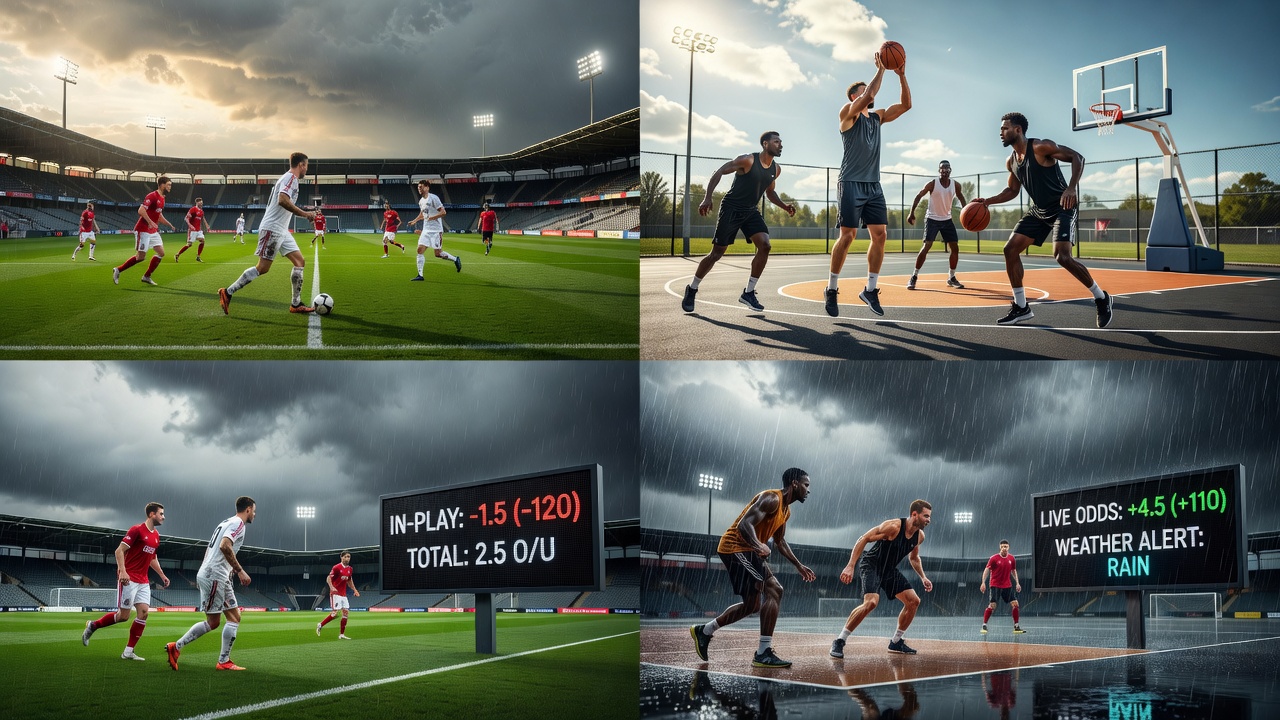
Open-air basketball surfaces experience distinct line recalibrations when relative humidity climbs above 70 percent, as ball grip and shooting mechanics change measurably according to biomechanical studies. Point-spread movements in these scenarios often favor the under, since defensive schemes gain slight advantages from slower ball movement and reduced perimeter accuracy.
Temperature drops of 10 degrees or more during evening contests trigger additional adjustments to player efficiency ratings, particularly for perimeter shooters whose release mechanics shift under cooler conditions. Observers tracking summer league data in 2026 recorded several instances where live totals moved 4 points or more after sunset, aligning with recorded drops in field goal percentages.
Integrated Data Sources and Market Reactions
Platforms incorporate satellite imagery, on-site sensors, and historical performance matrices to generate updated probabilities, allowing in-play lines to reflect environmental realities faster than manual systems once permitted. Academic analyses from Canadian research groups have quantified how precipitation intensity correlates with turnover rates, supplying models that oddsmakers now reference during active contests.
These inputs produce cascading effects across correlated markets, such as player props tied to yardage or points scored, where a single weather variable can simultaneously influence multiple betting options. Market depth remains sufficient to absorb these shifts without excessive volatility when liquidity providers maintain active hedging positions.
Conclusion
Atmospheric monitoring has become a standard component of modern in-play wagering infrastructure for open-air football and basketball, where verifiable environmental data drives line movements that reflect actual playing conditions. Continued refinement of sensor networks and predictive algorithms suggests these adjustments will grow more precise as additional data streams integrate into existing frameworks.